


Table of Contents
- Introduction
- Mistake #1: Poor Camera Placement Creates Dangerous Blind Spots
- Mistake #2: Ignoring Lighting and Night Vision Capabilities
- Mistake #3: Weak Connectivity or Power Interruptions
- Mistake #4: Unsecured Video Feeds Invite Cyber Risks
- Mistake #5: Skipping Routine Maintenance and Inspections
- Comparison Table: Common Mistakes & Best Practices
- Protect Your Property with Jatagan Security
- FAQ
Introduction
Outdoor security cameras serve as one of the most powerful deterrents against theft, vandalism, trespassing, and other on-site threats. This is especially true for properties like construction sites, industrial facilities, commercial buildings, and cannabis operations — environments where visibility and monitoring directly impact operational safety and regulatory compliance.
However, installing outdoor surveillance equipment isn’t enough on its own. Even the most advanced systems can become ineffective when placed incorrectly, left unmaintained, or not secured digitally. At Jatagan Security, we’ve deployed thousands of rugged, AI-enabled cameras across Northern California and have seen firsthand how small oversights can lead to significant vulnerabilities.
Below are the top five outdoor security camera mistakes that property owners and site managers should avoid, along with expert guidance on how to build a stronger, more reliable security foundation.
1. Poor Camera Placement Creates Dangerous Blind Spots
Camera placement is the backbone of any effective outdoor surveillance strategy. When cameras are positioned at the wrong height, angle, or distance, blind spots emerge. These gaps often occur in key areas such as entry gates, material storage zones, perimeter fencing, and parking lots — the exact locations where incidents are most likely to occur.
Common causes of blind spots include:
- Mounting cameras too high or too low
- Installing cameras behind obstructions like signage or equipment
- Positioning cameras facing direct sunlight or reflective surfaces
- Failing to overlap fields of view
Best Practices:
- Overlap camera views to eliminate gaps
- Avoid pointing cameras at bright lights or shiny metal structures
- Test visibility during day, night, and transitional lighting conditions
- Capture both wide-angle coverage and close-range detail shots
Proper camera placement isn’t just technical — it’s strategic. A single poorly aimed camera can undermine an entire security system.
2. Ignoring Lighting and Night Vision Capabilities
Most property crimes occur after dark, making reliable night monitoring essential. Yet many property owners overlook how lighting affects camera performance. A high-resolution camera is only as good as its ability to capture detail in low-light conditions.
When areas are poorly lit, cameras without infrared (IR) or starlight sensors struggle, leading to blurry or unusable footage.
Common night-vision mistakes include:
- Relying on ambient light instead of dedicated illumination
- Using cameras without IR or low-light technology
- Creating glare with overly bright floodlights
- Leaving areas completely unlit
Best Practices:
- Install motion-activated lighting in dark or high-traffic zones
- Select cameras equipped with IR, starlight, or low-lux sensors
- Balance brightness to prevent image washout
- Confirm nighttime footage quality during installation
At Jatagan Security, our surveillance specialists build 24/7 monitoring solutions that maintain clarity no matter the lighting environment — from remote farms to bustling construction sites.
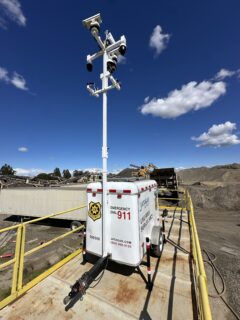
3. Weak Connectivity or Power Interruptions
Even the best camera can’t protect a property if it loses signal or power. For remote or temporary sites — such as construction zones, agricultural fields, outdoor event spaces, or rural cannabis farms — consistent uptime is critical.
Issues that cause downtime include:
- Unstable Wi-Fi or overloaded networks
- Excessive cable distances that reduce signal quality
- Power outages or voltage fluctuations
- Environmental hazards affecting power lines
Best Practices:
- Use cellular-based surveillance units for unstable or off-grid sites
- Consider solar-powered cameras with generator backups
- Protect cables and power sources from weather and tampering
- Regularly test system uptime and remote connectivity
Jatagan Security’s mobile surveillance units are engineered to operate autonomously, offering continuous monitoring even where power and internet infrastructure are unreliable.
4. Unsecured Video Feeds Invite Cyber Risks
A growing number of security breaches happen not through physical entry, but through unsecured video feeds. Mistakes like leaving default passwords untouched or delaying firmware updates make cameras easy targets for hackers.
Once compromised, intruders can disable cameras, manipulate recordings, or steal sensitive footage. For regulated industries like cannabis, this can also result in compliance violations.
Best Practices:
- Replace default passwords immediately
- Use strong, unique login credentials
- Enable two-factor authentication for all user accounts
- Encrypt camera feeds and cloud storage
- Restrict access to authorized team members only
- Keep firmware and software up to date
Cybersecurity is an essential extension of physical security — and ignoring it can leave your entire system vulnerable.
5. Skipping Routine Maintenance and Inspections
Outdoor cameras face weather, dust, debris, insects, and temperature extremes year-round. Over time, these conditions degrade performance and reduce image quality.
Common neglect issues include:
- Dirty or smudged lenses
- Loose brackets or mounts
- Corroded wiring
- Water-damaged housings
- Spider webs blocking night vision IR sensors
Best Practices:
- Clean and inspect all cameras at least once per quarter
- Check housings and cables after storms or high winds
- Verify image clarity and angle alignment regularly
- Review stored footage to ensure recording quality
Routine maintenance may be simple — but it’s one of the most cost-effective ways to protect your property and maintain compliance.
Comparison Table: Common Mistakes & Best Practices
Mistake |
Risk Created |
Best Practice |
|
Poor camera placement |
Blind spots, missing evidence |
Overlap views, test day/night visibility |
|
Insufficient lighting |
Low-quality nighttime footage |
Install IR-capable cameras, add balanced lighting |
|
Weak connectivity/power |
Camera downtime |
Use cellular/solar units, test network stability |
|
Unsecured video feeds |
Hacking, data theft |
Update passwords, enable 2FA, encrypt feeds |
|
Lack of maintenance |
Blurry or unusable footage |
Clean quarterly, inspect after storms |
Protect Your Property with Jatagan Security
Avoiding these mistakes can drastically improve security performance, reduce incident risk, and strengthen regulatory compliance. Whether you oversee a construction zone, industrial yard, cannabis farm, or commercial property, Jatagan Security provides rugged, AI-powered surveillance systems engineered for harsh environments.
Our team handles everything — from strategic planning to installation, remote monitoring, and maintenance — ensuring your cameras work exactly when you need them most.
Frequently Asked Questions
How many outdoor security cameras does my site need?
It depends on layout, risk level, and property size. Jatagan Security offers free site assessments to determine optimal coverage.
What makes mobile surveillance units better for temporary or remote sites?
They’re fully self-contained, can be solar-powered, and use cellular or Starlink connectivity—ideal for locations without permanent infrastructure.
Can I monitor my cameras from my phone?
Yes. Jatagan Security systems include cloud-based dashboards for 24/7 remote viewing and playback.
How often should cameras be maintained?
We recommend quarterly inspections and additional checks after severe weather.
Do Jatagan Security cameras work in extreme weather?
Absolutely. Our equipment is ruggedized and rated for heat, cold, dust, and moisture often found in construction and agricultural environments.