


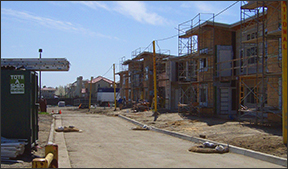
Construction sites are difficult environments to secure. Valuable equipment, tools and materials may remain outdoors overnight, access points change as work progresses, and temporary fencing or structures can create vulnerabilities that did not exist a few weeks earlier.
Theft and vandalism can result in more than the direct cost of damaged or stolen property. A single incident can interrupt work, delay trades, require emergency repairs and create additional administrative and insurance costs.
The most effective construction site security plans address both sides of the problem: reducing the opportunity for an incident to occur and knowing what to do when someone does get onto the property.
Table of Contents
- Why Construction Sites Are High-Risk Targets
- What to Do After Theft or Vandalism Occurs
- 10 Ways to Reduce Construction Site Theft and Vandalism
- Construction Site Security at a Glance
- Review Security as the Jobsite Changes
- Frequently Asked Questions
Why Construction Sites Are High-Risk Targets
Construction sites combine several characteristics that make them attractive targets.
Tools, copper, fuel, building materials and heavy equipment can have significant resale value. Many of these assets remain on the property overnight or over a weekend when few, if any, workers are present.
At the same time, the site itself is constantly changing. New structures go up, equipment moves, materials arrive and fence lines or access points may be relocated. Those changes can create blind spots and new routes into the property.
Construction sites are also difficult to secure like permanent buildings. Temporary gates, large outdoor perimeters and multiple subcontractors coming and going make strict access control harder to maintain.
This is why security should not be treated as something that is installed once at the beginning of a project and left unchanged until completion.
What to Do After Theft or Vandalism Occurs
If an incident has already occurred, repairing the damage is only part of the response. The incident can also reveal where the site’s security plan is weak.
First, document what happened. Preserve available video, photographs and other evidence, and report the incident to law enforcement and appropriate project stakeholders when necessary.
Then look at the site itself.
Where did the person enter? Was a fence cut or climbed? Was a gate left vulnerable? Was the targeted area outside effective camera coverage? Did equipment, containers or temporary structures block a camera’s view? Was the activity detected, and if so, what happened next?
After identifying the likely route and target, address that specific weakness. That could mean repositioning a camera, improving lighting, reinforcing a fence, relocating valuable materials or changing the response procedure for that area.
Pay particular attention to repeat activity. If people repeatedly approach the same part of the property, that is useful information. They may have identified an access point or security gap that is easier to exploit than the rest of the site.
10 Ways to Reduce Construction Site Theft and Vandalism
1. Secure the Perimeter
Fencing establishes the first physical boundary between the public and the jobsite. Gates should be secured after hours, and unnecessary openings should be eliminated.
The condition of the perimeter matters as much as its presence. Check regularly for damaged fencing, gaps, objects placed against a fence that could make climbing easier, and areas obscured from view.
A fence will not necessarily stop a determined intruder, but it can make unauthorized entry more difficult and give a monitoring or security system more time to detect and respond.
2. Use Lighting Strategically
Good lighting can discourage opportunistic activity and improve nighttime visibility, but simply making the entire site as bright as possible is not always the answer.
Prioritize entrances, equipment storage, material staging areas and known blind spots. Avoid layouts that create extreme contrast, glare or deep shadows that make camera images harder to interpret.
For temporary or remote sites, solar or portable lighting may be useful where permanent electrical service is unavailable.
3. Use Video Surveillance Designed for the Site
Construction cameras should be positioned around actual risk, not simply where installation is easiest.
Camera coverage should include likely approaches, vulnerable perimeter sections, high-value materials and areas where equipment is stored. For large outdoor sites, nighttime detection distance is especially important. Being able to see a distant fence on a screen is not necessarily the same as reliably detecting a person there.
Site changes also matter. A camera that had a clear view in January may be blocked by equipment or structures in March.
4. Consider Live Video Monitoring
Recorded video is valuable for investigation, but it does not necessarily stop an incident while it is happening.
Live video monitoring adds the ability to assess activity in real time and, depending on the system, use voice warnings, lights, sirens or escalation procedures to intervene.
Contractors comparing monitoring services should understand how the service operates. Some monitoring models depend on an automated alert before a person reviews the video, while others include active human monitoring. What matters is whether suspicious activity in critical areas can be detected and acted upon quickly.
5. Control Access During Working Hours
Not every loss occurs after hours.
Construction sites can have employees, subcontractors, delivery drivers and visitors moving through the property throughout the day. Keeping track of who is authorized to enter helps reduce unnecessary access and provides accountability when something goes missing.
Depending on the project, this can include controlled gates, visitor logs, badges, keypads or mobile check-in systems.
Access privileges should also be reviewed as contractors and subcontractors complete their work.
6. Secure Tools, Equipment and High-Value Materials
Do not make valuable property easier to steal than necessary.
Small tools should be placed in locked storage at the end of the shift. Vehicles and equipment can be protected with immobilizers, GPS tracking or other controls where appropriate.
Materials such as copper wire, appliances and other easily resold products deserve additional attention. When possible, avoid leaving large quantities exposed in easily accessible areas.
The goal is not only to prevent access, but to increase the time, effort and risk involved in removing something from the property.
7. Reduce Unnecessary Stockpiling
Material delivery schedules can affect theft risk.
If high-value materials arrive long before they are needed, the site may be storing an attractive target for days or weeks. Where project schedules allow, phased or just-in-time deliveries can reduce the amount of valuable material sitting unattended.
When stockpiling is unavoidable, place higher-value items in controlled or well-monitored areas rather than near a remote perimeter or secondary access point.
8. Design the Site With Visibility in Mind
Jobsite layout can either help or undermine security.
Containers, trailers, equipment and temporary structures can create hiding places or block views across the property. Where practical, keep valuable assets away from the perimeter and maintain clear sight lines around high-risk areas.
This does not mean security considerations should dictate the entire construction plan. It means site logistics and security should be considered together rather than independently.
9. Use Security Personnel Where Physical Presence Is Needed
Some projects require people on site for duties such as access control, inspections, vehicle checks or other tasks that cannot be handled remotely.
Where guards are used, their responsibilities should be clearly defined. A large outdoor site may be difficult for one person to observe continuously, so video surveillance and other technology can supplement areas that are not always visible during a patrol.
The appropriate combination depends on site size, operating requirements and the types of risks being addressed.
10. Establish a Consistent End-of-Day Routine
Many security weaknesses come from small operational lapses.
A simple closeout procedure can help ensure that gates are locked, tools are stored, equipment is secured and unusual conditions are reported before workers leave.
Workers should also know whom to contact when they notice damaged fencing, a camera with an obstructed view, suspicious activity or another security concern.
Consistency matters. A good security plan becomes less effective if basic procedures are followed only some of the time.
Construction Site Security at a Glance
| Area | Common vulnerability | What to review |
|---|---|---|
| Perimeter | Fence cuts, climbing or unmonitored sections | Fence condition, gates, camera coverage |
| Equipment | Vehicles or machinery left exposed | Immobilizers, tracking and monitored location |
| Materials | Copper, tools or appliances stockpiled on site | Storage location and delivery timing |
| Cameras | Blind spots or obstructed views | Placement, nighttime range and changing conditions |
| Access points | Unauthorized or poorly tracked entry | Gates, credentials and visitor procedures |
| After-hours response | Activity recorded but not addressed | Monitoring and intervention procedures |
| Daily operations | Gates or equipment left unsecured | End-of-day checklist and accountability |
Review Security as the Jobsite Changes
One of the most important parts of construction site security is also one of the easiest to overlook: reassessment.
The site you secured at the beginning of the project will not look the same several months later. New buildings may obstruct cameras. Temporary entrances may become permanent ones. Copper, fixtures or other valuable materials may arrive during later phases. Equipment may move to a different part of the property.
Security should change with those conditions.
Reviews do not need to be complicated. Walk the perimeter after major site changes. Look at nighttime camera views. Check whether high-value areas are still visible. Review recent suspicious activity and ask whether repeated approaches are occurring in the same location.
If an incident occurs, use it as information. Determine what the intruder learned about the site and make sure the same weakness is not available the next time.
No individual tactic can eliminate construction site theft and vandalism. Physical barriers, good operating procedures, surveillance, monitoring and response work best when they support one another and are adjusted as the project evolves.
For outdoor construction sites throughout Northern California, including the Sacramento region and San Francisco Bay Area, Jatagan designs video security and live monitoring solutions around each property’s layout, perimeter and changing conditions.
Frequently Asked Questions
1. What should you do after vandalism occurs at a construction site?
Document the damage and preserve any available video or evidence. Report the incident when appropriate, then determine how the person entered the site and what was targeted. Review fencing, lighting, camera coverage and response procedures around that area, and correct the specific weakness that allowed or contributed to the incident.
2. How can construction sites prevent theft and vandalism?
Effective prevention usually combines perimeter security, controlled access, lighting, secure storage, appropriate video surveillance, monitoring and consistent site procedures. Because construction sites change frequently, the security plan should also be reviewed as the project progresses.
3. Are security cameras enough to protect a construction site?
Cameras are useful, but their effectiveness depends on placement, nighttime detection capability, monitoring and response. Cameras that only record an incident may help with investigation but cannot intervene while an intrusion is occurring.
4. What are the most vulnerable areas of a construction site?
Common vulnerabilities include remote fence lines, secondary gates, equipment and material storage areas, poorly lit sections of the site and locations where temporary structures or equipment create blind spots. The vulnerable areas can change as construction progresses.
5. How often should construction site security be reviewed?
Review security whenever there is a significant change in the site’s layout, access points, equipment locations or high-value materials. Longer projects should also have periodic reviews to make sure cameras, fencing and other controls still address the site’s current risks.
6. Can construction site security be improved without replacing the entire system?
Often, yes. Depending on the problem, improvements may involve changing camera positions, adding coverage to a vulnerable area, adjusting lighting, strengthening access controls, adding live monitoring or changing how materials and equipment are stored. The first step is identifying the actual security gap rather than assuming the entire system needs to be replaced.