


Table of Contents
-
Executive Summary
-
Project Overview: SMUD Station J Substation
-
The Security Challenge: Urban Critical Infrastructure Construction
-
Jatagan’s Solution: AI Analytics + Remote Live Monitoring + Active Deterrence
-
Deployment and Operations: Technology, Coverage, and Escalation
-
Incident Timeline and Turning Point: Copper Theft → Hot Spot Camera Fix
-
Results and Business Impact
-
Why This Approach Worked
-
Key Takeaways for Utilities and Infrastructure Projects
-
Frequently Asked Questions (FAQ)
Executive Summary
In October 2025, Jatagan Security began protecting SMUD’s Station J Substation project site in downtown Sacramento. Station J is a critical power infrastructure build designed to increase electrical capacity and improve grid reliability for Sacramento’s midtown and downtown communities. With demolition and construction activity scheduled from late 2025 through 2028, SMUD required a security approach that could adapt to changing site conditions and reduce exposure to theft, vandalism, and project disruption.
Within the first three months, the site saw frequent intrusion attempts—about 50 incidents. In early November 2025, intruders entered through a fence line at the edge of camera coverage where AI tripwires were less effective. Monitoring agents detected them once inside the site and activated audio and visual deterrents, then escalated to onsite guards and police when they weren’t deterred. The guards did not respond to our call, and during the delay, the intruders stole copper from HVAC condenser units. Rather than treating the incident as inevitable, Jatagan used this as actionable intelligence, revised response protocol to fast police escalation and strengthened coverage at the vulnerable entry point by adding a dedicated zoomed-in camera focused on the site’s “hot spot”.
Since the protocol revision and hot spot camera deployment, there have been no further issues. Backed by AI detection analytics, remote live monitoring, active deterrence (air horns, sirens, verbal warnings, and flashing lights), and escalation protocols that include onsite security and police, Jatagan employs a layered approach to help strengthen the site’s security posture during the highest-risk early phases of construction.
Project Overview: SMUD Station J Substation
Station J is being developed on a 10.3-acre site in a developed area near downtown Sacramento. The project includes demolition and cleanup of existing structures and construction of new substation infrastructure to connect Station J with nearby SMUD electrical facilities.
Location
North B St. and North 14th St., River District, Sacramento (just north of downtown)
Why It Matters
Substations are critical links in electricity delivery—stepping voltage down for safe distribution to homes and businesses. Station J expands SMUD’s grid by increasing capacity and improving reliability for existing customers and planned development in downtown and midtown Sacramento.
The Security Challenge: Urban Critical Infrastructure Construction
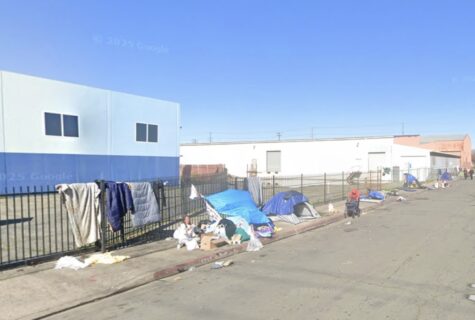
Critical infrastructure job sites face a unique security equation: they are long-duration, high-value, and often highly visible. The Station J site is located in a downtown-adjacent area with high street access and proximity to a nearby homeless encampment, increasing after-hours movement near the perimeter.

Primary Risks
-
Unauthorized entry and after-hours trespassing
-
Copper theft and equipment tampering (HVAC, grounding, cables)
-
Vandalism and safety hazards
-
Project disruption, rework, and schedule delays
-
Increased insurance exposure and replacement costs
SMUD required a program designed not just to record evidence, but to prevent repeat incidents and protect project momentum.
Jatagan’s Solution: AI Analytics + Remote Live Monitoring + Active Deterrence
Jatagan delivered a layered remote guarding solution built for critical infrastructure environments where speed and adaptability matter.
Core Capabilities
-
AI detection analytics to identify people and vehicles and reduce false alerts
-
24/7 remote live monitoring with real-time event detection
-
Active deterrence using air horns, sirens, verbal warnings, and flashing lights
-
Escalation protocols to contact onsite security and police when needed
The goal was to shorten response time, increase deterrence effectiveness, and eliminate vulnerabilities before they could be exploited again.
Deployment and Operations: Technology, Coverage, and Escalation
To secure the Station J site quickly and build redundancy across the perimeter, Jatagan uses:
Deployed Security Technologies
-
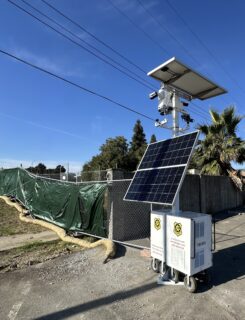
1 Solar Mobile Guard™
-
3 Solar Pole Guards™
-
1 Satellite Guard™
-
Range-Boosted AI Camera System™ (for improved distance detection and targeted coverage)
This blend provided wide-area visibility and layered monitoring across access points, staging areas, and perimeter edges—even as demolition activity changed sight lines and work zones.

Onsite Security Guard Coordination
The project also maintained onsite security guards:
-
Monday–Friday: 4:30 PM to 7:00 AM
-
Weekends and holidays: 24-hour coverage
Jatagan’s remote operations acted as a force multiplier by detecting events early, applying deterrence immediately, and escalating to onsite security or police as required.
Escalation Protocols
Jatagan follows a structured escalation model:
-
Detect and verify with AI + live monitoring
-
Activate deterrence (air horn, siren, verbal warnings, and flashing lights)
-
Contact onsite security for on-the-ground response
-
Escalate to police when threat behavior warrants it
Incident Timeline and Turning Point: Copper Theft → Hot Spot Camera Fix
Frequent Intrusion Activity (Oct–Dec 2025)
From the start of protection, the site experienced frequent intrusion attempts—around 50 incidents within the first three months. In many instances, deterrence helped stop intruders at the perimeter.
Copper Theft Incident (Early November 2025)
Within the first three months of deployment, the site experienced a high volume of attempted intrusions—roughly 50 incidents—highlighting just how persistent these threats can be in a high risk zone. Most of these attempts were detected and deterred, but in early November 2025 we saw a more serious breach that exposed a specific weakness in the physical layout and camera coverage.
During the first part of November 2025, intruders gained access through the fence line at the far edge of our camera views—an area where the AI tripwire coverage was less effective due to distance and the limitations of the original camera angle. As a result, AI did not flag the intruders at the fence. Instead, our monitoring agents detected them when they entered the site.
Once the intruders were identified onsite, our agents initiated the full escalation protocol. They activated air horns, sirens, verbal warnings, and flashing lights, all designed to interrupt the intrusion and compel the individuals to leave. When these deterrents failed to stop the activity, the team escalated further by notifying both the onsite security guards and local law enforcement.
Despite those notifications, the onsite guards did not respond to intercept the intruders in real time. During that delay, the intruders were able to steal copper from HVAC condenser units.
The incident revealed a critical gap: requiring a fast police escalation, and strengthening of a particular entry point, where the intruder appeared very small on screen.
As a result:
-
AI tripwire detection was less effective at that distance
-
Verification was harder for live monitoring agents
-
The intruder exploited a predictable “low-detection” path
Corrective Action:
Faster Police Escalation & Dedicated Zoomed-In Hot Spot Camera
Jatagan determined the most effective fix was to implement faster police escalation and add a camera with a zoomed-in view dedicated to the hot spot entry location, increasing subject clarity, detection, and confidence.
Since the response protocol revision and dedicated hot spot camera was added, there have been no further issues.
Results and Business Impact
Station J illustrates an outcome that matters most to utilities and infrastructure owners: when an incident occurs, the security program must learn, adapt, and improve fast.
Outcomes Snapshot
METRIC
|
OUTCOME
|
Engagement Start
|
October 2025
|
Incident Volume
|
~50 intrusion incidents in < 3 months
|
Loss Event
|
1 incident (copper loss) in early November 2025
|
Deterrence Tools
|
Air horns, sirens, verbal warnings, and flashing lights
|
Escalation
|
Onsite security guards (failed to respond) & Police
|
Onsite Guard Coverage
|
4:30pm–7am M–F; 24/7 weekends/holidays
|
Corrective Action
|
Faster police escalation & zoomed-in hot spot camera
|
Post-Fix Result
|
No further issues
|
Value Delivered
-
Improved detection reliability at the exploited entry point
-
Faster deterrence response & police escalation
-
Reduced repeat loss probability
-
Stronger coordination between remote monitoring, onsite security guards, and police
-
Better protection of assets and schedule continuity
Why This Approach Worked
Station J’s environment required a security plan that could adapt in real time: adjacent homeless encampments, elevated after-hours movement, and evolving demolition conditions. Jatagan’s layered approach worked because it combined:
-
AI analytics for faster detection and fewer false positives
-
Range-Boosted AI Camera System™ for long-range coverage
-
Active deterrence that interrupts theft attempts immediately
-
Remote live monitoring that verifies and responds in real time
-
Escalation protocols aligned with onsite guards and police
-
Continuous improvement, using incident data to eliminate vulnerabilities
The hot spot camera upgrade demonstrated the strength of this model: identify the exploited gap, deploy a targeted fix, and prevent recurrence.
Key Takeaways for Utilities and Infrastructure Projects
-
Urban substation construction sites are intrusion-prone. Plan for frequent attempts early.
-
Edge-of-frame zones are high risk. If subjects are too small, detection confidence drops.
-
Hot spot cameras are a best practice. Dedicated zoomed-in views detect and deter repeat incidents.
-
Deterrence is a differentiator. Lights, sirens, horns, and voice warnings prevent loss, not just document it.
-
Hybrid security scales. Remote video monitoring + onsite guard & police provide better coverage and faster response.
Frequently Asked Questions (FAQ)
What is SMUD Station J Substation?
Station J is a new SMUD substation project designed to improve grid reliability and increase electrical capacity for downtown and midtown Sacramento.
When did Jatagan begin providing security for Station J?
Jatagan began securing the site in October 2025 during early demolition and construction preparation.
What technology did Jatagan deploy?
Jatagan deployed Solar Mobile Guard™, Solar Pole Guards™, Satellite Guard™, and the Range-Boosted AI Camera System™, supported by 24/7 remote live monitoring and active deterrence.
What deterrence tools are used to stop intruders?
Jatagan uses air horns, sirens, verbal warnings, and flashing lights to deter intruders in real time.
What happened during the copper theft in November 2025?
Intruders entered through a fence which is at the edge of the camera views where AI tripwires were less effective. Our monitoring agents detected the intruders once they were on the site and activated audio and visual warnings. When they weren’t deterred, we contacted onsite security guards and police. The guards did not respond and the intruders stole copper from HVAC condenser units.
How was the issue fixed?
Jatagan implemented faster police escalation and installed a dedicated zoomed-in hot spot camera at the vulnerable entry point. Since then, there have been no further issues.
Does the Station J site have onsite guards?
Yes. The site has onsite security guards, with hours from 4:30pm–7am Monday through Friday and 24/7 coverage on weekends and holidays. However, on the day of the incident, they did not respond to our call.